Key facts
- 360 million people worldwide have disabling hearing loss (1), and 32 million of these are children.
- Hearing loss may result from genetic causes, complications at birth, certain infectious diseases, chronic ear infections, the use of particular drugs, exposure to excessive noise, and ageing.
- 60% of childhood hearing loss is due to preventable causes.
- 1.1 billion young people (aged between 12–35 years) are at risk of hearing loss due to exposure to noise in recreational settings.
- Unaddressed hearing loss poses an annual global cost of 750 billion international dollars (2). Interventions to prevent, identify and address hearing loss are cost-effective and can bring great benefit to individuals.
- People with hearing loss benefit from early identification; use of hearing aids, cochlear implants and other assistive devices; captioning and sign language; and other forms of educational and social support.
Over 5% of the world’s population – 360 million people – has disabling hearing loss (328 million adults and 32 million children). Disabling hearing loss refers to hearing loss greater than 40 decibels (dB) in the better hearing ear in adults and a hearing loss greater than 30 dB in the better hearing ear in children. The majority of people with disabling hearing loss live in low- and middle-income countries.Approximately one third of people over 65 years of age are affected by disabling hearing loss. The prevalence in this age group is greatest in South Asia, Asia Pacific and sub-Saharan Africa.Hearing loss and deafness
A person who is not able to hear as well as someone with normal hearing – hearing thresholds of 25 dB or better in both ears – is said to have hearing loss. Hearing loss may be mild, moderate, severe, or profound. It can affect one ear or both ears, and leads to difficulty in hearing conversational speech or loud sounds.'Hard of hearing' refers to people with hearing loss ranging from mild to severe. People who are hard of hearing usually communicate through spoken language and can benefit from hearing aids, cochlear implants, and other assistive devices as well as captioning. People with more significant hearing losses may benefit from cochlear implants.'Deaf' people mostly have profound hearing loss, which implies very little or no hearing. They often use sign language for communication.Causes of hearing loss and deafness
The causes of hearing loss and deafness can be divided into congenital causes and acquired causes.Congenital causes
Congenital causes may lead to hearing loss being present at or acquired soon after birth. Hearing loss can be caused by hereditary and non-hereditary genetic factors or by certain complications during pregnancy and childbirth, including:- maternal rubella, syphilis or certain other infections during pregnancy;
- low birth weight;
- birth asphyxia (a lack of oxygen at the time of birth);
- inappropriate use of particular drugs during pregnancy, such as aminoglycosides, cytotoxic drugs, antimalarial drugs, and diuretics;
- severe jaundice in the neonatal period, which can damage the hearing nerve in a newborn infant.
Acquired causes
Acquired causes may lead to hearing loss at any age, such as:- infectious diseases including meningitis, measles and mumps;
- chronic ear infections;
- collection of fluid in the ear (otitis media);
- use of certain medicines, such as those used in the treatment of neonatal infections, malaria, drug-resistant tuberculosis, and cancers;
- injury to the head or ear;
- excessive noise, including occupational noise such as that from machinery and explosions;
- recreational exposure to loud sounds such as that from use of personal audio devices at high volumes and for prolonged periods of time and regular attendance at concerts, nightclubs, bars and sporting events;
- ageing, in particular due to degeneration of sensory cells; and
- wax or foreign bodies blocking the ear canal.
Among children, chronic otitis media is a common cause of hearing loss.Impact of hearing loss
Functional impact
One of the main impacts of hearing loss is on the individual’s ability to communicate with others. Spoken language development is often delayed in children with unaddressed hearing loss.Unaddressed hearing loss and ear diseases such as otitis media can have a significantly adverse effect on the academic performance of children. They often have increased rates of grade failure and greater need for education assistance. Access to suitable accommodations is important for optimal learning experiences but are not always available.Social and emotional impact
Exclusion from communication can have a significant impact on everyday life, causing feelings of loneliness, isolation, and frustration, particularly among older people with hearing loss.Economic impact
WHO estimates that unaddressed hearing loss poses an annual global cost of 750 billion international dollars. This includes health sector costs (excluding the cost of hearing devices), costs of educational support, loss of productivity, and societal costs.In developing countries, children with hearing loss and deafness rarely receive any schooling. Adults with hearing loss also have a much higher unemployment rate. Among those who are employed, a higher percentage of people with hearing loss are in the lower grades of employment compared with the general workforce.Improving access to education and vocational rehabilitation services, and raising awareness especially among employers about the needs of people with hearing loss, will decrease unemployment rates for people with hearing loss.Prevention
Overall, it is suggested that half of all cases of hearing loss can be prevented through public health measures.In children under 15 years of age, 60% of hearing loss is attributable to preventable causes. This figure is higher in low- and middle-income countries (75%) as compared to high-income countries (49%). Overall, preventable causes of childhood hearing loss include:- Infections such as mumps, measles, rubella, meningitis, cytomegalovirus infections, and chronic otitis media (31%).
- Complications at the time of birth, such as birth asphyxia, low birth weight, prematurity, and jaundice (17%).
- Use of ototoxic medicines in expecting mothers and babies (4%).
- Others (8%)
Some simple strategies for prevention of hearing loss include:- immunizing children against childhood diseases, including measles, meningitis, rubella and mumps;
- immunizing adolescent girls and women of reproductive age against rubella before pregnancy;
- preventing cytomegalovirus infections in expectant mothers through good hygiene; screening for and treating syphilis and other infections in pregnant women;
- strengthening maternal and child health programmes, including promotion of safe childbirth;
- following healthy ear care practices;
- screening of children for otitis media, followed by appropriate medical or surgical interventions;
- avoiding the use of particular drugs which may be harmful to hearing, unless prescribed and monitored by a qualified physician;
- referring infants at high risk, such as those with a family history of deafness or those born with low birth weight, birth asphyxia, jaundice or meningitis, for early assessment of hearing, to ensure prompt diagnosis and appropriate management, as required;
- reducing exposure (both occupational and recreational) to loud sounds by raising awareness about the risks; developing and enforcing relevant legislation; and encouraging individuals to use personal protective devices such as earplugs and noise-cancelling earphones and headphones.
Identification and management
Early detection and intervention are crucial to minimizing the impact of hearing loss on a child’s development and educational achievements. In infants and young children with hearing loss, early identification and management through infant hearing screening programmes can improve the linguistic and educational outcomes for the child. Children with deafness should be given the opportunity to learn sign language along with their families.Pre-school, school and occupational screening for ear diseases and hearing loss is an effective tool for early identification and management of hearing loss.People with hearing loss can benefit from the use of hearing devices, such as hearing aids, cochlear implants, and other assistive devices. They may also benefit from speech therapy, aural rehabilitation and other related services. However, global production of hearing aids meets less than 10% of global need and less than 3% of developing countries’ needs. The lack of availability of services for fitting and maintaining these devices, and the lack of batteries are also barriers in many low-income settings.Making properly-fitted, affordable hearing aids and cochlear implants and providing accessible follow-up services in all parts of the world will benefit many people with hearing loss.People who develop hearing loss can learn to communicate through development of lip-reading skills, use of written or printed text, and sign language. Teaching in sign language will benefit children with hearing loss, while provision of captioning and sign language interpretation on television will facilitate access to information.Officially recognizing national sign languages and increasing the availability of sign language interpreters are important actions to improve access to sign language services. Encouraging organizations of people with hearing loss, parents and family support groups; and strengthening human rights legislation can also help ensure better inclusion for people with hearing loss.WHO response
WHO assists Members States in developing programmes for ear and hearing care that are integrated into the primary health-care system of the country. WHO’s work includes:- providing technical support to Member States in development and implementation of national plans for hearing care;
- providing technical resources and guidance for training of health-care workers on hearing care;
- developing and disseminating recommendations to address the major preventable causes of hearing loss;
- undertaking advocacy to raise awareness about the prevalence, causes and impact of hearing loss as well as opportunities for prevention, identification and management;
- developing and disseminating evidence-based tools for effective advocacy;
- observing and promoting World Hearing Day as an annual advocacy event;
- building partnerships to develop strong hearing care programmes, including initiatives for affordable hearing aids, cochlear implants and services;
- collating data on deafness and hearing loss to demonstrate the scale and the impact of the problem;
- promoting safe listening to reduce the risk of recreational noise-induced hearing loss through the WHO Make Listening Safe initiative; and
- promoting social inclusion of people with disabilities, including people with hearing loss and deafness, for example, through community-based rehabilitation networks and programmes.
1. Disabling hearing loss refers to hearing loss greater than 40dB in the better hearing ear in adults and a hearing loss greater than 30dB in the better hearing ear in children.For more information contact
WHO Media centre
Telephone: +41 22 791 2222
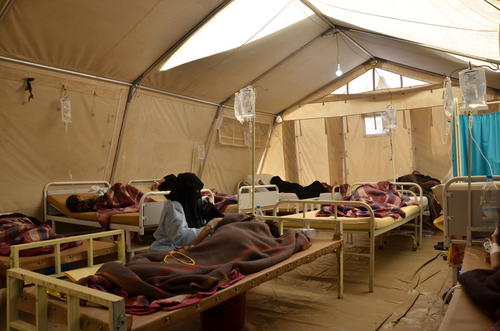
E-mail: mediainquiries@who.int डिफ्थीरिया जीवाणु कयनेबक्टेरियम (Corynebacterium)से पैदा होने वाला गले का एक ऐसा रोग है जिसमें नाक या गले /कंठ के पिछले भाग में एक झिल्ली राख या स्लेटी रंग जैसी ही बन जाती है एन्टीटॉक्सिन्स और एन्टिबायोटिक्स देने से यह रोग ठीक तो हो जाता है लेकिन रोगी को अलग थलग रखना पड़ता है। वरना यह (महा )संक्रामक रोग है आज यमन को ये अपने गले के नीचे उतार रहा है वहां दवाएं नहीं हैं गत ढ़ाई बरसों से निरंतर चल रहे युद्ध की वजह से आवाजाही निलंबित है।
It is an acute infectious bacterial disease with inflammation of a mucous membrane specially of the throat ,resulting in the formation of a false membrane causing difficulty in breathing and swallowing.
टीकाकरण इसका सीधा समाधान है।
ज्वर और गले की दुखन सोर थ्रोट इसके आम लक्षण हैं।अलावा इसके हार्ट फेलियर ,फालिज (Paralysis )यहां तक के मृत्यु भी इसकी वजह बनते हैं।
रोगी के छींकने ,खखारने ,coughing से उसके स्रावों secretions से यह आसपास उपस्थित लोगों को भी संक्रमित कर देता है। खतरनाक छूतहा रोग है यह।
टीकाकरण उपलब्ध होने से पहले हर बरस इसके दो लाख मामले अमरीका में सामने आते थे। दर्ज़ होते थे।तकरीबन तकरीबन दुनिया भर के देशों से इसका उन्मूलन भी हो चुका है यहां तक के लोग इस रोग को भूल चुके हैं स्वास्थ्य कर्मी इसीलिए यमन में इसके लक्षण जल्दी से पहचान नहीं पाते हैं। यमन में भी इसका आखिर मामला १९९२ में मिला था पूर्व में १९८२ में इसने वहां एक व्यापक रोग का ,प्रकोप का रूप ले लिया था।चालीस फीसद मामलों में यह रोग घातक सिद्ध होता है लापरवाही जानलेवा साबित होती है।मरीज़ को परिवार से अलग न रख पाना एक कमरे में यवनों के परिवारों की तरह औलाद की भीड़ सबको अपने चंगुल में ले लेती है। जबकि परिवार के शेष लोगों को बचावी चिकित्सा देकर बचाये रखा जा सकता है।यमन में इसे मानव निर्मित रोग ही कहा जाएगा जहां चंद क्लिनिक काम तो कर रहें हैं लेकिन लोगों के पास उन तक पहुँचने के लिए न ईंधन है न अन्य साधन। कैसी विडंबना है यह इस शती की जो युद्ध उन्माद को गैर -प्रासंगिक बना देती है।http://www.msf.org/en/article/yemen-cholera-diphtheria-%E2%80%93-shattered-health-system-battles-new-threat

(CNN) Almost 17 million infants worldwide are breathing toxic air, potentially affecting their brain development, according to a UNICEF report published Wednesday. More than two-thirds of the affected infants -- over 12 million -- live in South Asia and are exposed to pollution six times higher than recommended limits. Particulates in pollution can damage brain tissue and impair cognitive development, the report states, with potential lifelong consequences. Air pollution is one of the biggest threats to child health globally. Pneumonia claims 920,000 children under the age of 5 every year, and the risk is greatest for those under the age of 1. Damaging infant brains The brain undergoes critical growth in the first 1,000 days of life, forming foundational neural connections in this stage. Exposure to air pollution during this time can therefore impact development, the report states. Breathing in Delhi air equivalent to smok...
टिप्पणी जोड़ें